Prologue · 481–987
Before the Capetians
From the Roman conquest of Gaul to the Merovingian Franks, Charlemagne's Carolingian empire and the kingdom of West Francia: a short introduction to the thousand years before 987.
Overview
In 52 BC Julius Caesar defeated the Gaulish leader Vercingetorix at the siege of Alesia, and Gaul became a Roman province for five hundred years. The Romans built roads and cities, and Latin gradually replaced the Celtic speech of the Gauls, later evolving into French.
As the Roman Empire declined in the fifth century, the Franks, a Germanic people, moved into Gaul. In 481 Clovis became king of the Franks; he united most of Gaul and was baptised a Catholic at Reims. The Merovingian dynasty he founded ruled for some 250 years, and the very name "France" means "land of the Franks". Most later kings of France were crowned at Reims, in the tradition of Clovis.
In the eighth century power passed to the mayors of the palace. In 732 Charles Martel turned back a Muslim army from Spain near Tours; in 751 his son Pepin deposed the last Merovingian king and founded the Carolingian dynasty. Pepin's son Charlemagne conquered much of western Europe and on Christmas Day 800 was crowned emperor by the pope in Rome.
After Charlemagne's death his empire was divided in three by the Treaty of Verdun of 843; the western kingdom, West Francia, became France. In the ninth and tenth centuries Vikings sailed far up the rivers, and in 911 the king granted the lower Seine to the Viking leader Rollo — the origin of the duchy of Normandy. The Carolingians grew ever weaker, and when King Louis V died in a hunting fall in 987 the nobles chose Hugh Capet, Count of Paris, as king. That election is where the story of this site begins.
Imperium
The Changing Map
- Carolingian empire
- Nominal subjects and tributaries
- West Francia (Charles the Bald)
- Middle Francia (Lothair)
- East Francia (Louis the German)
- Brittany
Borders are indicative only, approximated from modern administrative regions.
814
Charlemagne's empire (814)
At Charlemagne's death the Carolingian empire spanned modern France, the Low Countries, western and central Germany, Switzerland and northern and central Italy, with the Spanish March south of the Pyrenees. The Bretons submitted only in name, and the duchy of Benevento in southern Italy paid tribute.
843
The Treaty of Verdun (843)
Louis the Pious's three sons divided the empire. Charles the Bald received West Francia, the future France; the eldest, Lothair, took the imperial title and a long middle strip from the Low Countries through Lorraine, Burgundy and Provence to Italy; Louis the German received East Francia beyond the Rhine, the future Germany.
Stemma
Family Tree
The principal figures of this era. Gold frames mark kings and emperors of France; diamonds mark marriages. Select a person to open their entry.
 Clovis I466–511
 Clotilde474–545
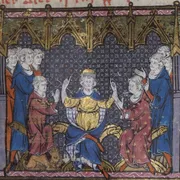 Charles Martel688–741
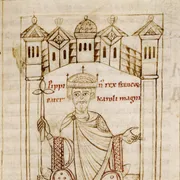 Pepin the Short714–768
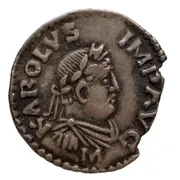 Charlemagne748–814
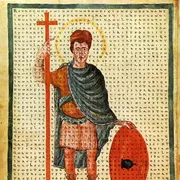 Louis the Pious778–840
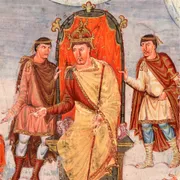 Charles the Bald823–877
Chronica
Chronology
- 481
Clovis becomes king of the Franks
Clovis succeeded his father as king of the Franks, went on to unite most of Gaul and founded the Merovingian dynasty.
- 496
Clovis baptised at Reims
Clovis was baptised a Catholic by Bishop Remigius of Reims, winning the support of the Gallic Church and the Gallo-Roman population. The traditional date is 496, though the exact year is disputed.
- 732
Battle of Tours
The mayor of the palace Charles Martel defeated an Umayyad army from Spain between Tours and Poitiers.
- 751
Pepin becomes king; the Carolingian dynasty begins
With the pope's blessing, Charles Martel's son Pepin deposed the last Merovingian king and took the crown himself.
- 80025 December 800
Charlemagne crowned emperor
Pope Leo III crowned Charlemagne in St Peter's, Rome — the first emperor in the West since the fall of Rome.
- 843
Treaty of Verdun
Charlemagne's three grandsons divided his empire; Charles the Bald received West Francia, the future France.
- 911
Foundation of Normandy
By the Treaty of Saint-Clair-sur-Epte, Charles the Simple granted the lower Seine to the Viking leader Rollo in return for defending it against other raiders.
Personae
People of this Era
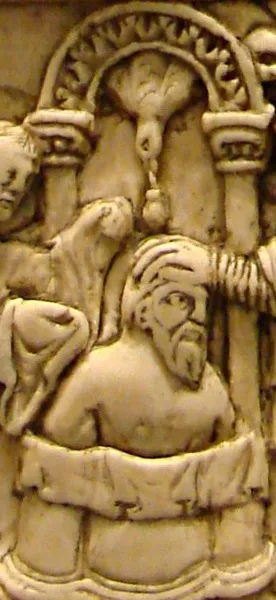 Clovis I466–511
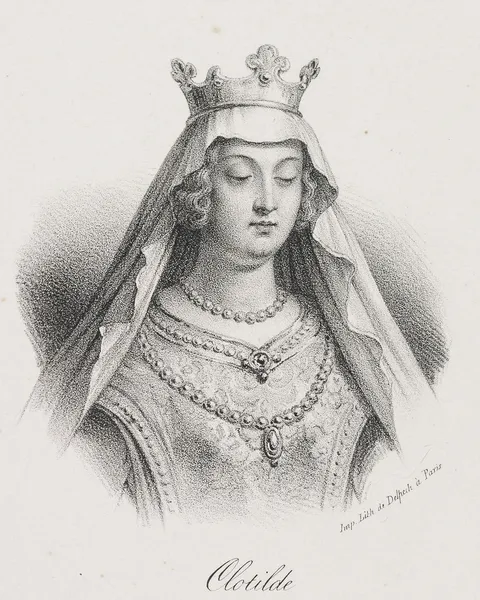 Clotilde474–545
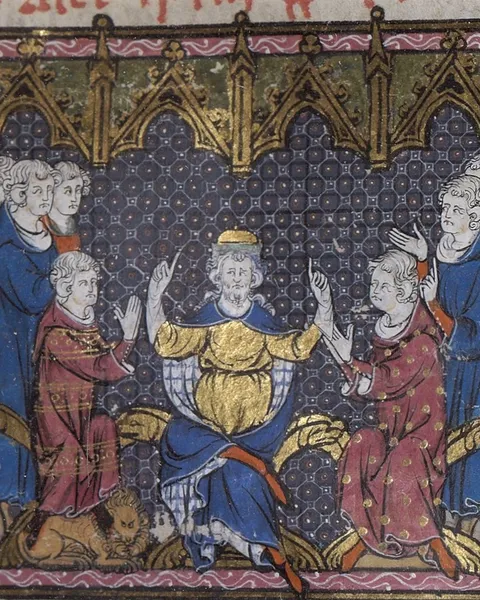 Charles Martel688–741
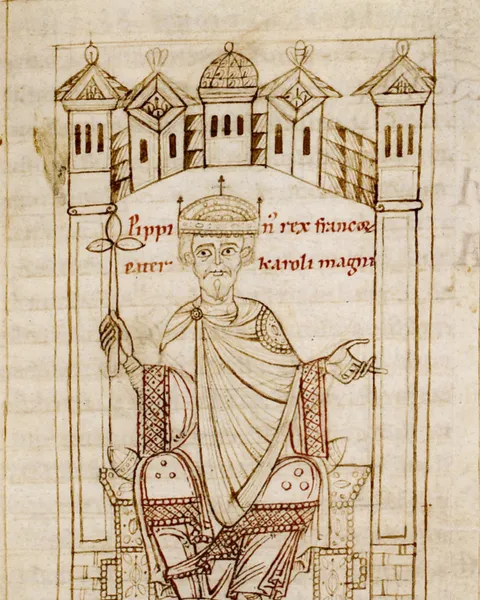 Pepin the Short714–768
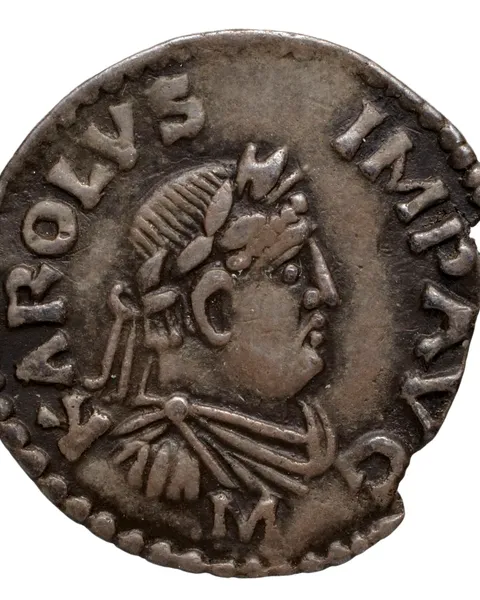 Charlemagne748–814
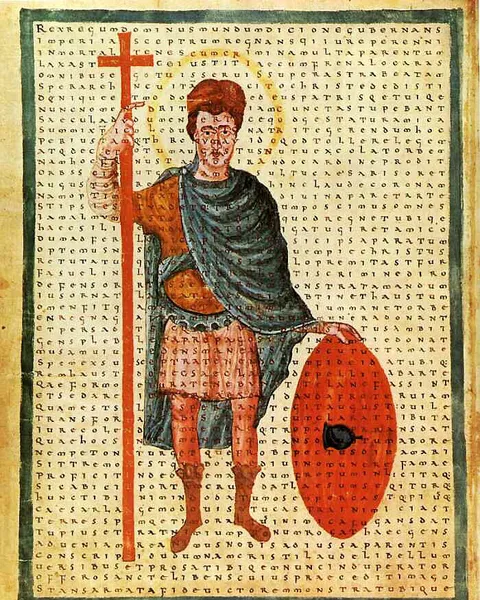 Louis the Pious778–840
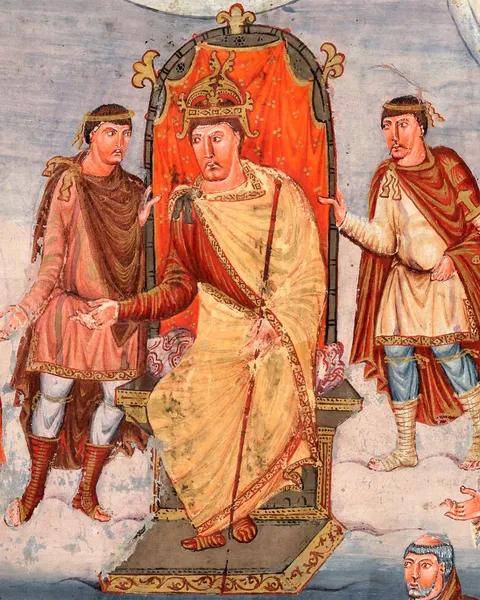 Charles the Bald823–877