Era VII · 1848–1870
Second Republic and Second Empire
Napoleon's nephew Louis-Napoléon was elected president, then seized power and made himself Emperor Napoleon III; the Second Empire rebuilt Paris and expanded overseas, but collapsed swiftly in the Franco-Prussian War.
Overview
After the February Revolution of 1848 France became the Second Republic, with votes for all adult men. That December, Napoleon's nephew Louis-Napoléon Bonaparte was elected president on the strength of his uncle's name. On 2 December 1851 he staged a coup, and the following year a plebiscite made him Emperor Napoleon III.
Napoleon III married the Spanish noblewoman Eugénie, and the court regained its splendour. He commissioned Baron Haussmann to rebuild Paris, clearing medieval alleys for boulevards, parks and sewers and creating the city we know today. In 1869 the French-built Suez Canal opened, with Empress Eugénie at the inauguration.
Abroad, France joined Britain in the Crimean War, and in 1860 British and French troops entered Beijing and burned the Old Summer Palace; France acquired the French Concession in Shanghai in 1849 and began to expand into Vietnam. But Napoleon III's attempt to set up the Habsburg Maximilian as Emperor of Mexico ended in failure (see the sister Habsburg site).
In July 1870 the Prussian minister Bismarck provoked France into the Franco-Prussian War. On 2 September Napoleon III surrendered at Sedan, and two days later Paris proclaimed the Third Republic. France never again had a king or an emperor, and the story of this site ends here. Napoleon III went into exile in England, where he died in 1873.
Imperium
The Changing Map
- France
- Savoy and Nice, gained in 1860
- France
- Ceded to the German Empire
Borders are indicative only, approximated from modern administrative regions.
1860
Savoy and Nice (1860)
Napoleon III sent an army to help the Kingdom of Sardinia against Austria and furthered Italian unification; in return Sardinia ceded Savoy and Nice to France in 1860, confirmed by local plebiscites.
1871
After the Franco-Prussian War (1871)
The Second Empire collapsed at Sedan, and the new Republic could not turn the war around. The Treaty of Frankfurt in 1871 ceded Alsace and northern Lorraine, including Metz, to the new German Empire; they were not returned to France until after the First World War.
Stemma
Family Tree
The principal figures of this era. Gold frames mark kings and emperors of France; diamonds mark marriages. Select a person to open their entry.
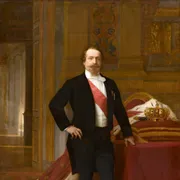 Napoleon III1808–1873
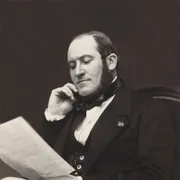 Georges-Eugène Haussmann1809–1891
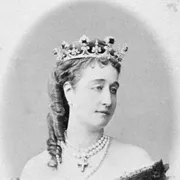 Eugénie de Montijo1826–1920
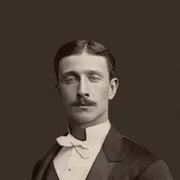 Louis-Napoléon, Prince Imperial1856–1879
Chronica
Chronology
- 184824 February 1848
February Revolution; the Second Republic
Revolution broke out again in Paris; Louis-Philippe abdicated and fled to England, and a provisional government proclaimed the Republic and universal male suffrage.
- 18496 April 1849
The French Concession in Shanghai
The French consul Charles de Montigny agreed with the Shanghai taotai on a French Concession north of the walled city; it was not returned to China until 1943.
- 18512 December 1851
Louis-Napoléon's coup
On the anniversary of Napoleon's coronation and of Austerlitz, President Louis-Napoléon dissolved the Assembly by force; a year later to the day he became Emperor Napoleon III.
- 1853June 1853
Haussmann begins rebuilding Paris
Napoleon III appointed Haussmann prefect of the Seine, opening seventeen years of works that remade Paris.
- 185427 March 1854
The Crimean War
Britain and France declared war on Russia in support of the Ottoman Empire, taking Sevastopol in 1855.
- 186018 October 1860
Burning of the Old Summer Palace
In the Second Opium War, British and French troops entered Beijing, looted the Old Summer Palace and then, on British orders, burned it. The Convention of Peking followed that month.
- 18625 June 1862
France acquires Cochinchina
The Nguyễn dynasty of Vietnam ceded Saigon and three southern provinces, the beginning of French rule in Indochina.
- 186410 April 1864
Maximilian becomes Emperor of Mexico
Napoleon III installed the Habsburg Maximilian as Emperor of Mexico; after the French troops left in 1867, Maximilian was shot.
- 186917 November 1869
The Suez Canal opens
The Suez Canal, built under Ferdinand de Lesseps, opened; Empress Eugénie led the procession aboard the imperial yacht L'Aigle.
- 18702 September 1870
Battle of Sedan
Napoleon III surrendered to the Prussians with an army of a hundred thousand men. Two days later Paris proclaimed the Third Republic, and the French monarchy was over for good.
Personae
People of this Era
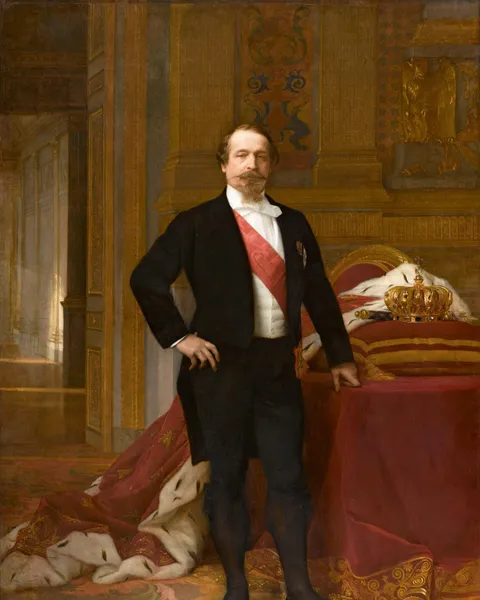 Napoleon III1808–1873
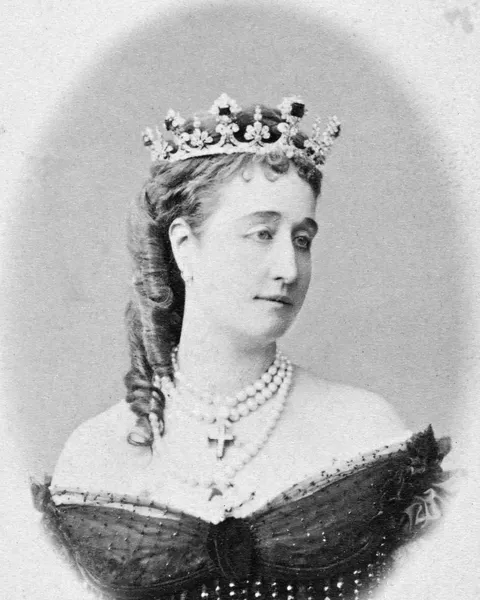 Eugénie de Montijo1826–1920
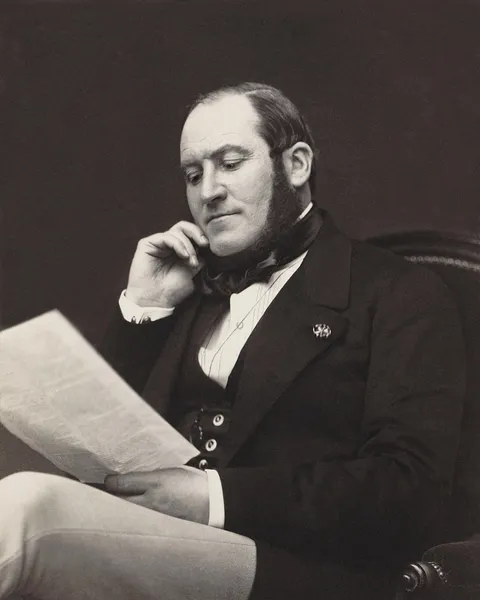 Georges-Eugène Haussmann1809–1891
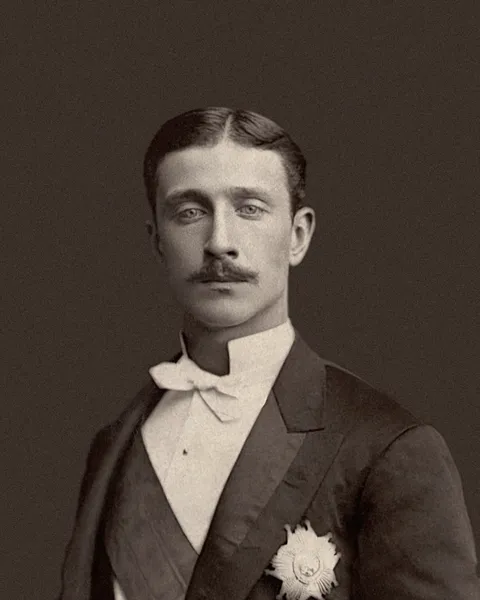 Louis-Napoléon, Prince Imperial1856–1879