Era VI · 1815–1848
Restoration and July Monarchy
After Napoleon's fall Louis XVI's two brothers reigned in turn, but royal power could never return to what it had been before the Revolution; the July Revolution of 1830 overthrew Charles X, and Louis-Philippe, "King of the French", founded a monarchy of the middle classes.
Overview
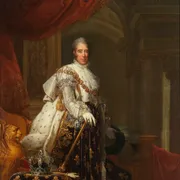
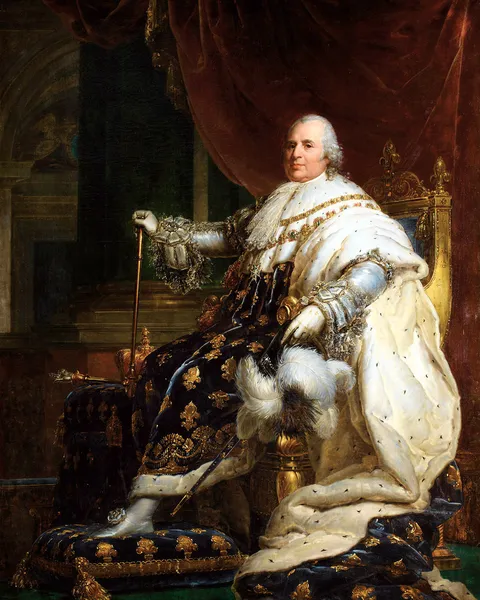
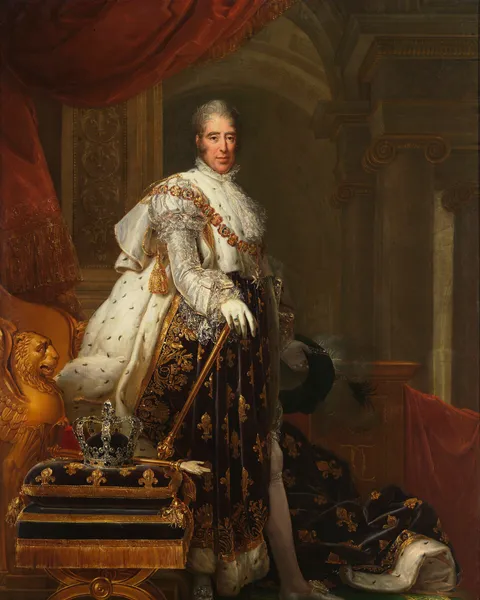
In 1814 Louis XVI's brother Louis XVIII was restored with the backing of the great powers. He granted a Charter that kept a parliament and some of the gains of the Revolution, and proved a pragmatic king. When he died in 1824 his brother Charles X succeeded, was crowned at Reims in the old manner, and set out to bring back the old regime.
In July 1830 Charles X issued ordinances curbing the press and the franchise. Parisians threw up barricades, and after "Three Glorious Days" of street fighting Charles X fled into exile in Britain. Delacroix's famous painting Liberty Leading the People depicts this July Revolution. The same year France began the conquest of Algeria.
Louis-Philippe, Duke of Orléans, became "King of the French" rather than "King of France", to show that his power came from the people. Plainly dressed, often strolling through Paris with an umbrella, he was seen as a middle-class king, and under him railways were built and trade and industry boomed. In 1840 Napoleon's remains were brought back to Paris and laid to rest at Les Invalides. But only a few wealthy men could vote, and in February 1848 revolution broke out in Paris again; Louis-Philippe, too, fled to Britain.
Imperium
The Changing Map
- France in 1815
- Lost imperial territory
Borders are indicative only, approximated from modern administrative regions.
1815
After the Congress of Vienna (1815)
After Napoleon's defeat France returned roughly to its borders of 1790, losing all its annexations in the Low Countries, the left bank of the Rhine, Italy and northern Germany; Savoy and Nice went back to the Kingdom of Sardinia. The restored Bourbons and the July Monarchy both ruled within these borders.
Stemma
Family Tree
The principal figures of this era. Gold frames mark kings and emperors of France; diamonds mark marriages. Select a person to open their entry.
 Louis XVIII1755–1824
 Charles X1757–1836
 Louis-Philippe I1773–1850
 Charles Ferdinand, Duke of Berry1778–1820
 Maria Amalia of Naples and Sicily1782–1866
 Ferdinand Philippe, Duke of Orléans1810–1842
 Henri, Count of Chambord1820–1883
Chronica
Chronology
- 181518 June 1815
Battle of Waterloo
Back in power for the Hundred Days, Napoleon was defeated at Waterloo by Wellington and Blücher, abdicated again four days later and was exiled to St Helena.
- 182014 February 1820
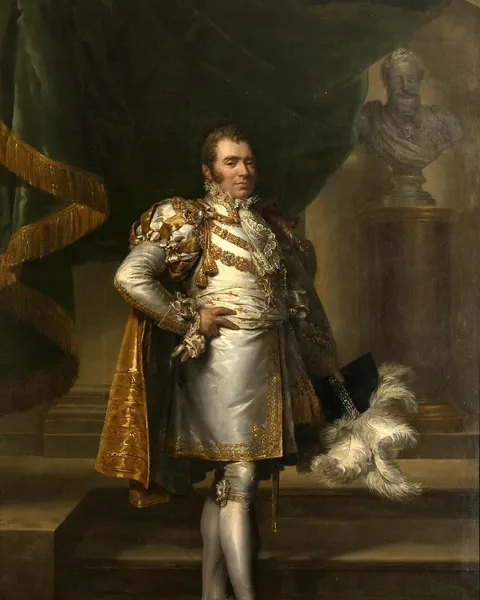
Assassination of the Duke of Berry
The Duke of Berry, Charles X's younger son, was stabbed to death outside the Paris Opera; seven months later his posthumous son Henri, 'the miracle child', was born.
- 18215 May 1821
Napoleon dies on St Helena
Napoleon died in exile, aged fifty-one.
- 18305 July 1830
France takes Algiers
French troops captured Algiers, beginning the conquest of Algeria, which would not win independence until 1962.
- 183027 July 1830
The July Revolution
Three days of street fighting in Paris overthrew Charles X, and Louis-Philippe, Duke of Orléans, became "King of the French".
- 184015 December 1840
Napoleon's remains return to Paris
Louis-Philippe sent his son to St Helena to bring Napoleon home; the emperor was laid to rest at Les Invalides.
- 184213 July 1842
Death of Ferdinand Philippe, Duke of Orléans
Louis-Philippe's eldest son jumped from a runaway carriage near Neuilly and died of his injuries, robbing the July Monarchy of its most popular heir.
- 184424 October 1844
Treaty of Whampoa
After the Opium War the French envoy Théodore de Lagrené signed a treaty with the Qing commissioner Qiying aboard a French warship off Whampoa, near Canton, winning trading rights similar to Britain's.
Personae
People of this Era
 Louis XVIII1755–1824
 Charles X1757–1836
 Charles Ferdinand, Duke of Berry1778–1820
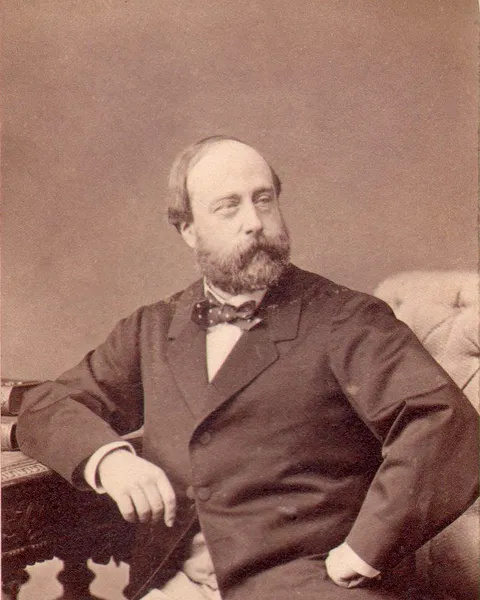 Henri, Count of Chambord1820–1883
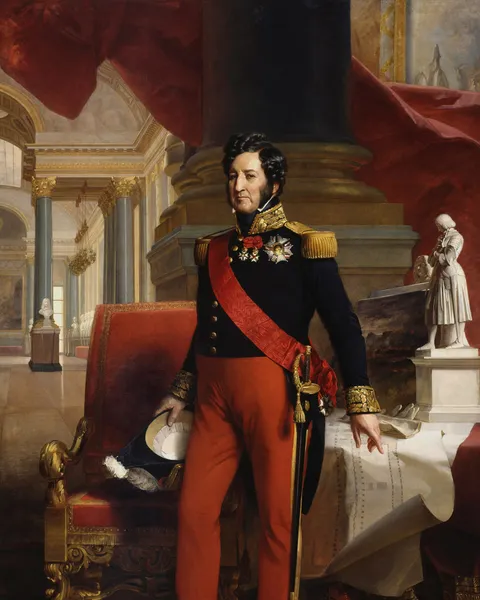 Louis-Philippe I1773–1850
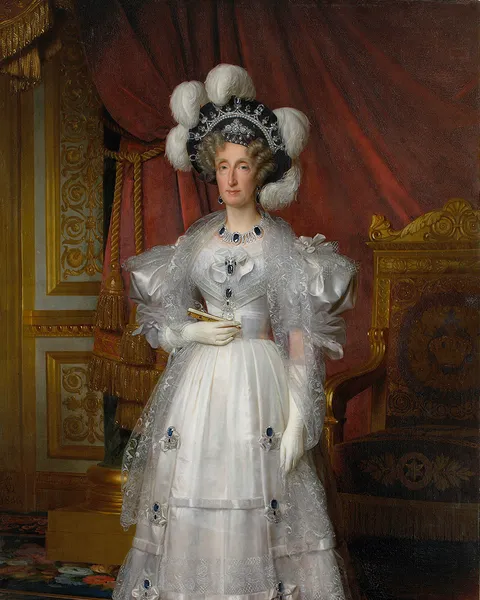 Maria Amalia of Naples and Sicily1782–1866
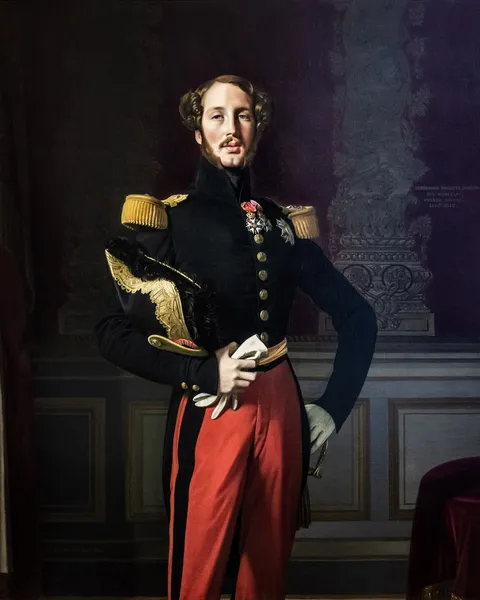 Ferdinand Philippe, Duke of Orléans1810–1842