A little archduchess in Vienna
Maria Antonia was born in the Hofburg in Vienna on 2 November 1755, the fifteenth child of the Empress Maria Theresa and the Emperor Francis I. Lively and charming, she danced and played music well, but was a poor scholar; at twelve she still wrote German and French badly.
France and Austria had just ended more than two centuries of enmity and become allies. To seal the alliance, Maria Theresa arranged for her daughter to marry the Dauphin Louis, grandson of Louis XV. The Abbé de Vermond, sent from Versailles, hurriedly coached her in French and the etiquette of the French court.
Bride at Versailles
In April 1770 the fourteen-year-old archduchess said farewell to her mother and set off west with an enormous train of carriages. At a handover ceremony on an island in the Rhine she exchanged her Austrian clothes for French ones and became Marie Antoinette of France. On 16 May she married the fifteen-year-old Dauphin at Versailles. The two were utterly unalike — he shy and awkward, fond of hunting and locksmithing — and the marriage was not consummated for seven years, to the endless gossip of the court.
Versailles was a maze of etiquette and factions. At first Marie Antoinette refused to speak to Louis XV’s mistress, Madame du Barry, causing a diplomatic incident, until a stern letter from her mother made her relent: on New Year’s Day 1772 she said to the countess, “There are a lot of people at Versailles today.” Through her ambassador, Count Mercy-Argenteau, Maria Theresa kept a close watch on her daughter’s every move.
The young queen
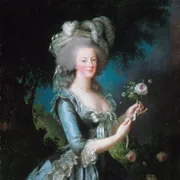
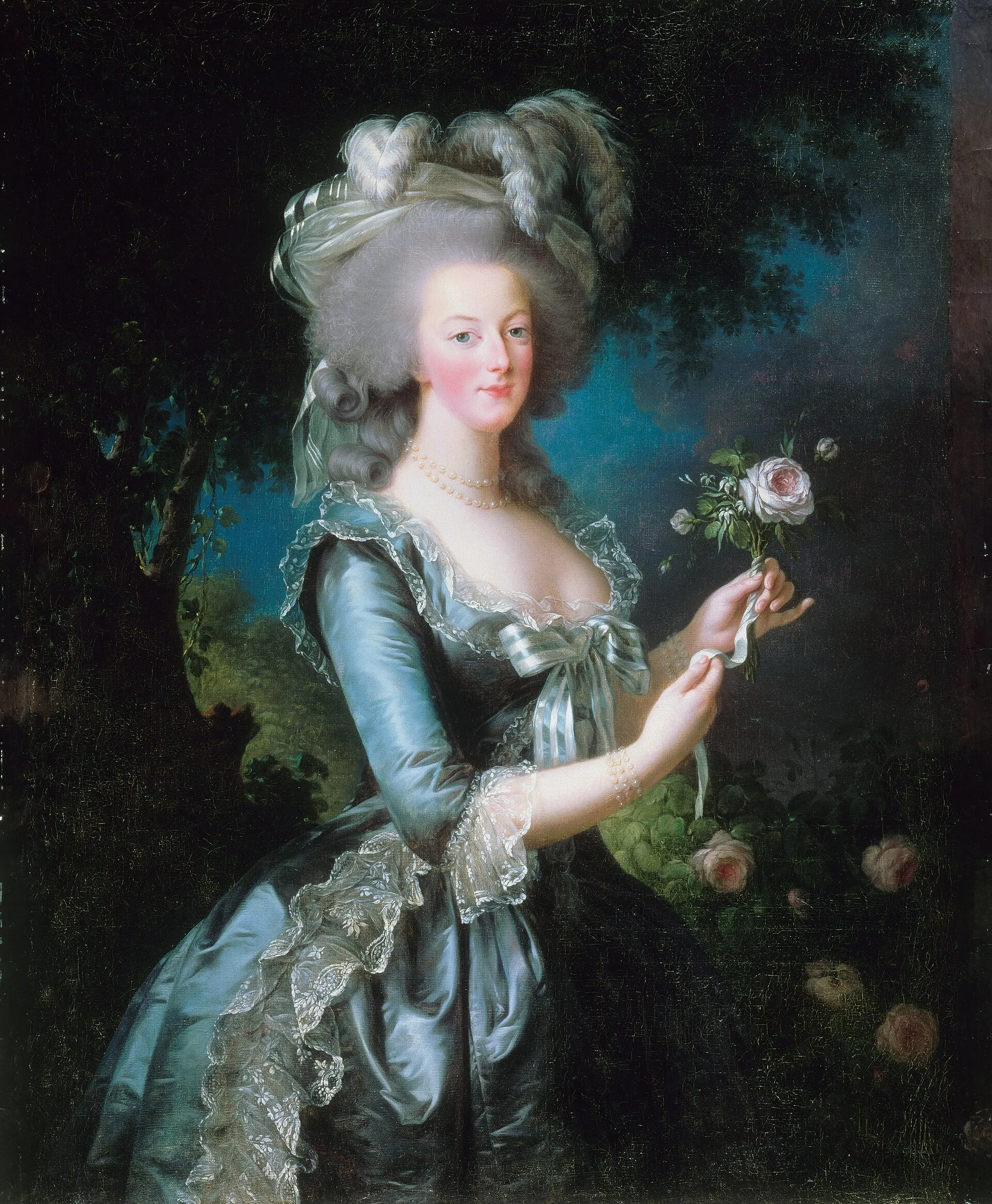
When Louis XV died of smallpox in 1774, Marie Antoinette became queen at eighteen. Bored by the stiffness of court life, she threw herself into fashion, towering hairstyles, gambling and masked balls. The king gave her the Petit Trianon in the park of Versailles, where she built the “Queen’s Hamlet”, modelled on a Norman village, and lived with a few close friends free of etiquette. Nobles shut out of her circle resented it, and pamphlets outside the court painted her as an extravagant, debauched “Austrian woman”.
In 1777 her brother, the Emperor Joseph II, visited France and gave his brother-in-law Louis XVI some frank advice, after which the royal marriage improved. Her daughter Marie-Thérèse was born in 1778 and the Dauphin Louis-Joseph in 1781, followed by Louis-Charles and Sophie. Motherhood made the queen’s life quieter. Her close friendship with the Swedish nobleman Axel von Fersen is still debated by historians.
The Diamond Necklace Affair
In 1785 an adventuress calling herself the Comtesse de La Motte, claiming to be the queen’s confidante, persuaded Cardinal de Rohan that the queen secretly wanted to buy a fabulously expensive diamond necklace, and arranged for a young woman to impersonate the queen in a night-time meeting with him in the gardens of Versailles. Rohan bought the necklace on the queen’s behalf; La Motte’s gang promptly broke it up and sold the stones. When the jewellers asked the queen for payment, the fraud came to light.
Louis XVI had Rohan arrested at Versailles and tried before the Paris Parlement, which acquitted him in 1786 — a verdict widely seen as a humiliation for the queen. She had known nothing of the affair, but most people believed she was involved, and her reputation collapsed. With the state’s finances near ruin, she became “Madame Deficit”. As for “let them eat cake”, the phrase first appears in Rousseau’s Confessions, written when she was a child; it had nothing to do with her.
Revolution
In June 1789 the Dauphin Louis-Joseph died of illness; in July the Bastille fell. On 5 October thousands of Paris women marched through the rain to Versailles demanding bread, and the next morning a crowd broke into the queen’s apartments; she escaped through a hidden passage to the king’s rooms. The royal family was taken back to Paris to the Tuileries and never saw Versailles again.
The queen opposed any compromise limiting royal power and wrote secretly to her brother Leopold II and other foreign rulers for help. In June 1791 she and Fersen planned the family’s escape; disguised as servants, they left Paris by carriage but were recognised and stopped at Varennes. When France declared war on Austria in April 1792, many suspected her of passing military secrets to the enemy. On 10 August crowds stormed the Tuileries; the royal family was imprisoned in the Temple tower, and in September the monarchy was abolished.
The guillotine
Louis XVI was executed in January 1793. In July her eight-year-old son Louis-Charles was taken from her by force; in August she was moved to the Conciergerie prison, where she was known as “prisoner no. 280”. At her trial in October the prosecution even accused her of incest with her son, to which she replied: “I appeal to every mother here!” — and the women in the gallery were visibly moved.
On 16 October 1793, thirty-seven-year-old Marie Antoinette, her hands tied behind her, was driven in an open cart through the streets of Paris to the Place de la Révolution. The painter Jacques-Louis David sketched her from the roadside, haggard but proud. On the scaffold she accidentally trod on the executioner’s foot and said, “Pardon me, monsieur, I did not do it on purpose.” They were her last words.
Afterwards
In 1815 Louis XVIII had the remains of his brother and sister-in-law exhumed and reburied at Saint-Denis, and built the Expiatory Chapel on the site of their first grave. For more than two centuries Marie Antoinette has divided opinion: revolutionary propaganda made her an extravagant foreigner, nineteenth-century royalists a martyred queen. Most historians today see her as neither monster nor saint, but an ordinary woman caught in a revolutionary age she never understood.