A boy from Corsica
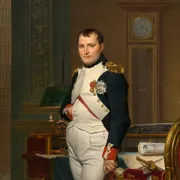
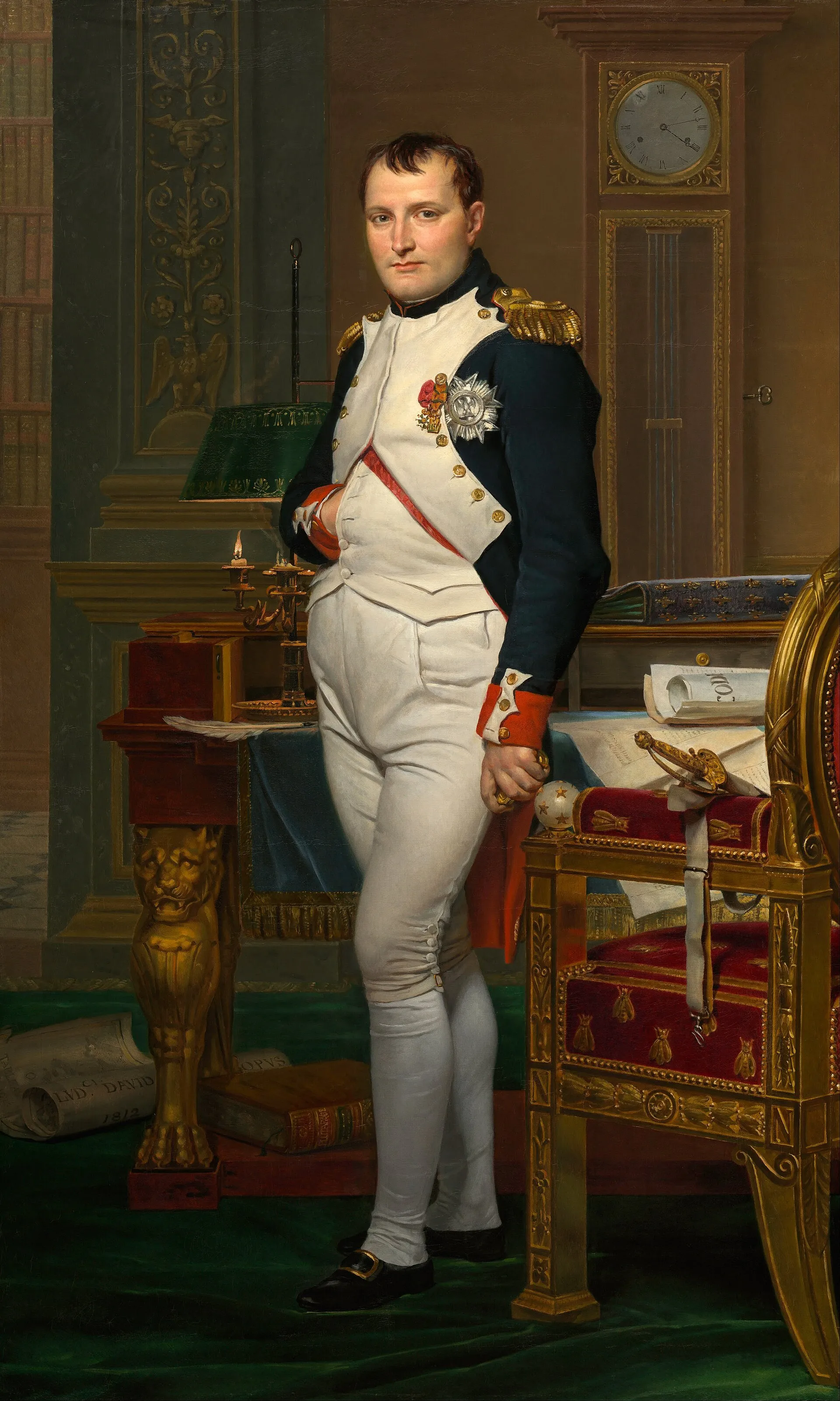
Napoleon Bonaparte was born at Ajaccio on Corsica on 15 August 1769, only a year after France had acquired the island from Genoa. His father, Carlo, was a lawyer of minor local nobility; his mother, Letizia, was tough and capable and raised eight children to adulthood. Napoleon’s first language was Corsican Italian. At nine he won a royal scholarship to the military school at Brienne in mainland France, where his accent and poverty made him a target of mockery; he buried himself in books and excelled at mathematics and history.
In 1785, at sixteen, he passed out of the École Militaire in Paris as a second lieutenant of artillery. His father died that year, leaving him to support the family on very little. After the Revolution broke out he went back to Corsica to take part in local politics, but fell out with its leaders, and in 1793 the whole family fled to mainland France.
Rising with the Revolution
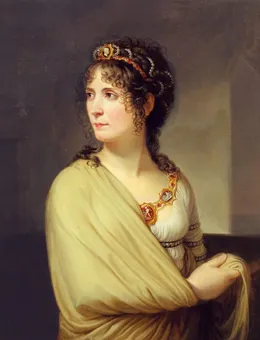
In 1793 royalists handed the naval base of Toulon to a British fleet. Commanding the artillery, Napoleon identified the high ground that controlled the harbour and helped the Republic’s army retake the town; at twenty-four he was made a brigadier general. In October 1795, when Paris royalists rose in revolt, he turned his guns on the crowds in the streets and saved the Convention, earning the favour of the Directory. The following March he married Josephine, a widow six years his senior, and two days later left to command the Army of Italy.
In Italy his rapid marches and concentration of force beat the Austrians again and again, and in 1797 he forced Austria to sign the Treaty of Campo Formio. In 1798 he invaded Egypt, hoping to cut Britain’s route to India, and routed the Mamluk cavalry near the Pyramids — but soon afterwards Admiral Nelson destroyed the French fleet in Aboukir Bay. The scholars who travelled with the army carried out a vast survey of Egypt, during which the Rosetta Stone was found. In 1799, hearing of turmoil at home, Napoleon abandoned his army and slipped back to France.
First Consul
On 9 November 1799 — 18 Brumaire, Year VIII — Napoleon, with Sieyès and others, overthrew the Directory and set up the Consulate, with himself as First Consul. In 1800 he beat the Austrians at Marengo, and peace with Britain followed, bringing Europe a brief respite.
The reforms of the Consulate laid the foundations of modern France. He placed a centrally appointed prefect in every department, founded the Bank of France and the lycées, and created the Legion of Honour to reward merit. The Concordat of 1801 with the pope recognised Catholicism as “the religion of the great majority of the French”, ending the Revolution’s conflict with the Church. The Civil Code of 1804, later called the Code Napoléon, established equality before the law and the rights of property. In 1803 he sold Louisiana to the United States for fifteen million dollars, doubling the size of the young republic. But in 1802 he also restored slavery in the French colonies, and he kept the press under tight censorship.
Emperor of the French
On 2 December 1804 Napoleon was crowned Emperor of the French in Notre-Dame. The next year the Royal Navy destroyed the French and Spanish fleets at Trafalgar, ending any hope of invading Britain; but on land he crushed the Austrian and Russian armies at Austerlitz on 2 December 1805, and the Prussians at Jena the following year. From 1806 his Continental System barred the Continent from trading with Britain, in an attempt to bring it to its knees economically.
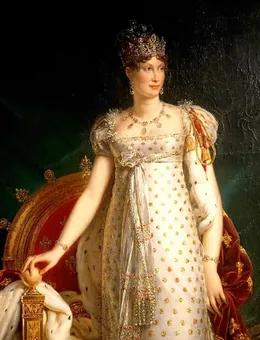
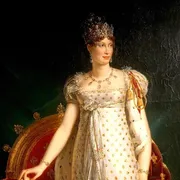
He placed his brothers on thrones: Joseph became King of Naples and then of Spain, Louis King of Holland, Jérôme King of Westphalia. In 1808 the Spanish rose against Joseph, the British landed in the Iberian Peninsula, and the Peninsular War drained the French army for years — “the Spanish ulcer”, Napoleon called it. In 1809 he divorced Josephine, who had given him no heir, and the next year married Marie-Louise, daughter of the Austrian emperor; in 1811 she bore him a son, the “King of Rome”.
From Moscow to Waterloo
When Russia refused to keep to the Continental System, Napoleon invaded in June 1812 with more than 600,000 men. The Russians retreated again and again; after the bloodbath of Borodino in September the French entered Moscow, only for the city to burn, and Tsar Alexander I refused to negotiate. The retreat that began in October, through cold, hunger and the attacks of Cossacks, destroyed the army; only a remnant crossed the Berezina.
The powers of Europe now combined against him. In October 1813 he was defeated at Leipzig in the “Battle of the Nations”; in March 1814 the allies took Paris, and in April he abdicated at Fontainebleau and was exiled to the Mediterranean island of Elba. Less than a year later, hearing of French discontent with the restored Bourbons, he landed on the south coast of France on 1 March 1815 with about a thousand men. The troops sent to stop him went over to his side, Louis XVIII fled, and Napoleon re-entered Paris for the Hundred Days. On 18 June he was defeated at Waterloo in Belgium by Wellington and Blücher, abdicated again four days later and surrendered to a British warship.
St Helena
The British exiled Napoleon to remote St Helena in the South Atlantic, where he lived at damp Longwood House. He dictated his recollections to his companions; edited by Las Cases as the Memorial of St Helena, they cast him as the defender of the Revolution’s ideals and did much to create the Napoleonic legend. In 1817 the British envoy Lord Amherst, returning from his embassy to China, called at St Helena and discussed China with him; the saying that China is “a sleeping lion” is often attributed to Napoleon, but it does not appear in reliable contemporary records.
Napoleon died on the island on 5 May 1821, aged fifty-one, probably of stomach cancer. In 1840 Louis-Philippe had his remains brought back to Paris and laid to rest at Les Invalides.
Achievements and costs
Napoleon’s Civil Code, prefects, lycées and Legion of Honour still shape France today, and his conquests spread the Code across Europe. He championed “careers open to talent”, letting men of humble birth rise by ability. Yet he ruled as a dictator, restored slavery, and his wars killed millions of soldiers and civilians. His nephew Louis-Napoléon would later found the Second Empire on the strength of his uncle’s name.