The prince from Béarn
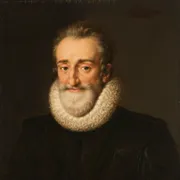
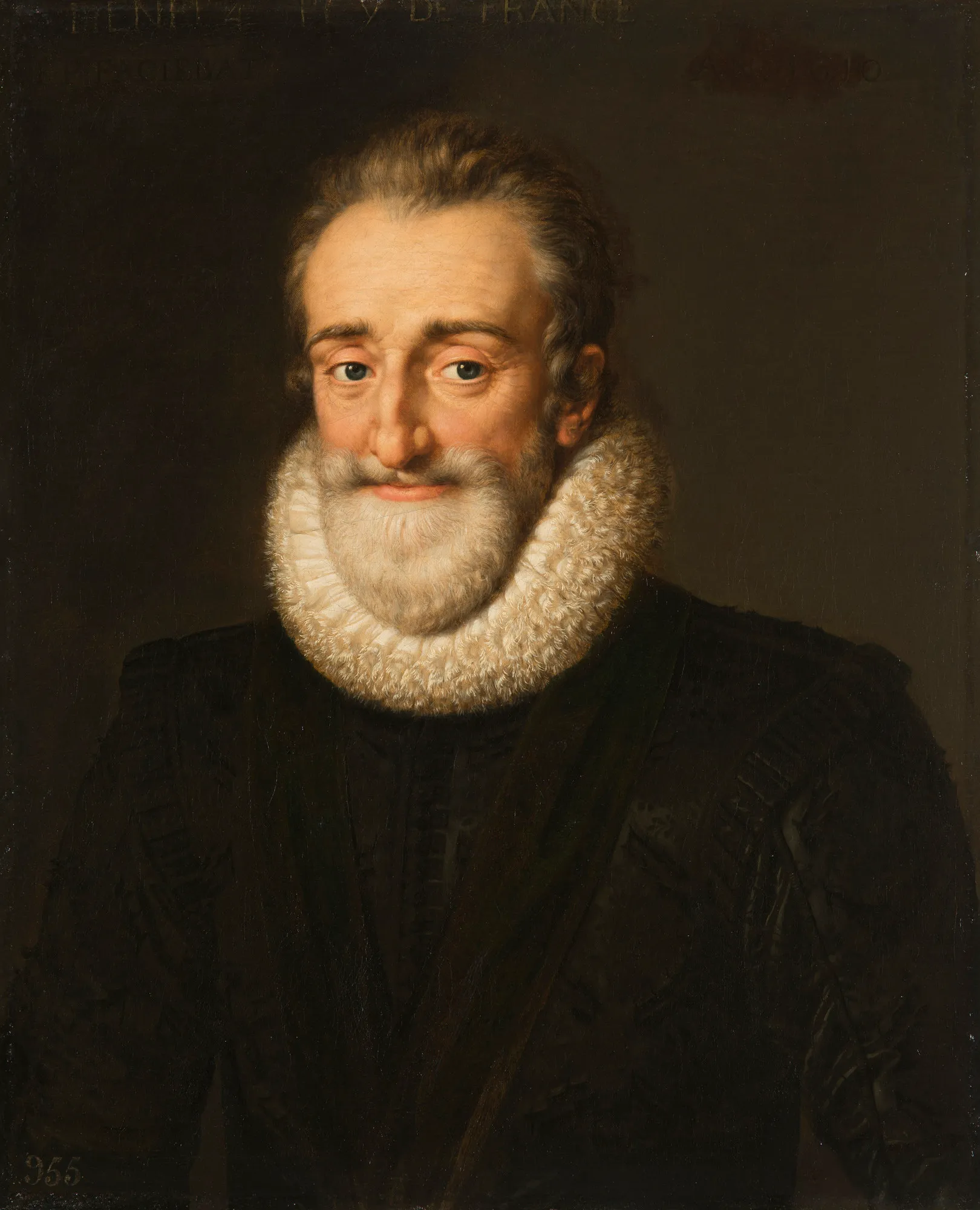
Henry was born at Pau, below the Pyrenees, on 13 December 1553. His father, Antoine de Bourbon, descended from Saint Louis through a distant branch of the royal family; his mother, Jeanne d’Albret, was Queen of Navarre and later a committed Calvinist. Legend says that at his birth his grandfather rubbed his lips with garlic and gave him a taste of the local wine to make him strong. He grew up in the Béarn countryside running about with peasant children, and kept a rough, plain-spoken manner all his life.
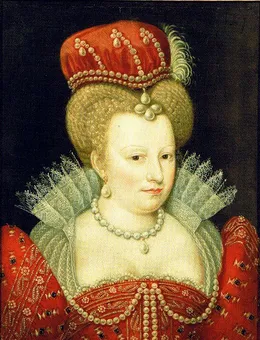
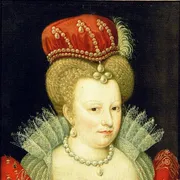
Henry was brought up a Protestant. When his mother died in June 1572, the eighteen-year-old became King of Navarre. His marriage to Marguerite de Valois, sister of King Charles IX, had already been agreed, as a gesture of reconciliation between Catholics and Protestants.
St Bartholomew’s night
The wedding took place on 18 August 1572 in front of Notre-Dame in Paris. Six days later the St Bartholomew’s Day massacre broke out, and almost all the Protestant nobles who had come for the wedding were killed. Henry, inside the Louvre, was offered “the Mass, death or the Bastille”, and had to become a Catholic; for nearly four years he was in effect a prisoner at court.
In 1576 he slipped away during a hunt, returned to the south-west, renounced Catholicism and became leader of the Huguenots. In 1584 the last brother of the childless Henry III, the Duke of Anjou, died, and under the rule of male succession the Protestant Henry of Navarre became heir presumptive to the French throne. The Catholic League under the Duke of Guise, financed by Philip II of Spain, refused to accept this, and the “War of the Three Henrys” followed. In 1587 Henry of Navarre routed a royal army at Coutras.
Winning the kingdom
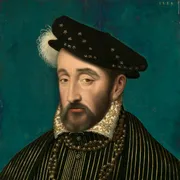
In 1588 Henry III had the Duke of Guise murdered, broke with the League and joined Henry of Navarre to besiege Paris. In August 1589 Henry III was stabbed by a friar and, dying, recognised Henry of Navarre as his heir. But although Henry IV was now king, the League and Paris refused to accept a Protestant as “the Most Christian King”, and many royal commanders deserted him.
He had to win his kingdom town by town. Before the battle of Ivry in 1590 he told his men, “Follow my white plume!” He then besieged Paris for months, and the city starved, but a Spanish relief army snatched victory from him. The League even considered choosing another king, and the King of Spain hoped to place his own daughter on the French throne.
“Paris is well worth a Mass”
Henry understood that the French would never accept a Protestant king. On 25 July 1593 he formally became a Catholic in the basilica of Saint-Denis — “Paris is well worth a Mass,” he is supposed to have said. With Reims still held by the League, he was crowned in Chartres cathedral in February 1594, and the next month Paris opened its gates to him. He treated his former enemies generously, buying over League nobles with money and offices, and the provinces came over one by one. The pope absolved him in 1595, and the Peace of Vervins with Spain in 1598 ended the foreign war.
In April of that year Henry issued the Edict of Nantes. Catholicism remained the state religion, but Protestants were allowed to worship in specified places, to hold public office and to keep about a hundred fortified towns. The edict ended more than thirty years of religious war and set an important precedent for toleration in early modern Europe. Neither Catholics nor Protestants were wholly satisfied, and Henry had to force the parlements to register it.
“Good King Henry”
With peace restored, Henry and his minister Sully rebuilt the shattered finances, cutting debt and filling the treasury. He cared about agriculture — he is said to have wished every peasant a chicken in the pot on Sundays — and encouraged the planting of mulberry trees for the silk industry. He built roads and bridges, began the Briare canal, completed the Pont Neuf in Paris and laid out the Place Royale, today’s Place des Vosges. In 1608 Samuel de Champlain, with his backing, founded Quebec, the beginning of New France.
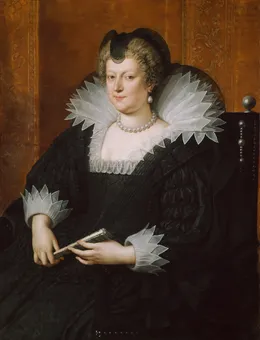
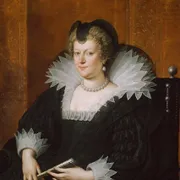
Henry’s private life was just as eventful; his many mistresses earned him the name “the Green Gallant”. He had hoped to marry his mistress Gabrielle d’Estrées, but she died suddenly in 1599. That year his marriage to Marguerite was annulled, and in 1600 he married Marie de’ Medici of Florence, who gave birth to the Dauphin Louis in 1601.
Assassination
In 1610 Henry prepared to go to war against the Habsburgs over the succession to Jülich-Cleves in western Germany. Before leaving he had Marie de’ Medici crowned queen at Saint-Denis, so that she could govern in his absence. The day after the coronation, 14 May, his carriage was held up in the narrow Rue de la Ferronnerie in Paris; the Catholic fanatic François Ravaillac leapt onto it and stabbed him to death. He was fifty-six.
The assassin was torn apart by horses. After his death the French remembered with growing affection the king who had ended the civil wars and rebuilt the country, and the legend of “Good King Henry” was born. When the royal tombs at Saint-Denis were opened during the Revolution in 1793, his body is said to have been well preserved; in 1818 the restored Bourbons put his equestrian statue back on the Pont Neuf, where it stands today.