The God-given
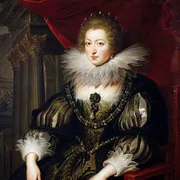
Louis was born on 5 September 1638 at Saint-Germain-en-Laye, west of Paris. His parents, Louis XIII and Anne of Austria, had been married for twenty-three years; after the queen’s many miscarriages France had almost given up hope of an heir, and the boy was hailed as Louis Dieudonné — “God-given”. Two years later came a brother, Philippe, the future Duke of Orléans.
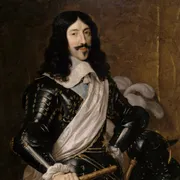
Louis XIII died in May 1643, and Louis, not yet five, became Louis XIV. The late king’s will had set up a regency council to limit the queen’s power, but Anne had the Paris Parlement set it aside, took the regency for herself and made the Italian-born Cardinal Mazarin chief minister. Mazarin taught the young king the business of government and diplomacy himself; the two were as close as father and son.
The Fronde
In 1648 France was still at war with Spain in the last phase of the Thirty Years’ War, and the crown kept raising taxes. The Paris Parlement led the resistance and Parisians threw up barricades in the streets: the revolt known as the Fronde. One night in January 1649 the royal family fled Paris in haste, and the ten-year-old king slept on straw in the empty château of Saint-Germain. Great nobles such as the Prince of Condé then rose in arms too, and civil war rumbled on until 1653.
One night in February 1651 a Paris crowd, suspecting that the royal family meant to flee again, forced its way into the palace demanding to see the king. Twelve-year-old Louis had to pretend to be asleep while the people filed past his bed. The humiliation left him with a lifelong distrust of the great nobles and of the Parisians, and a determination never to share his power with anyone. He was crowned at Reims in 1654.
Ruling in person
Under the Peace of the Pyrenees, Louis XIV married the Spanish infanta Maria Theresa in 1660. When Mazarin died the following March, the 22-year-old king summoned his ministers the next day and told them there would be no more chief minister: he would decide everything himself. Many expected the young king soon to tire of paperwork. Instead he spent hours on state business every day for more than fifty years.
The finance superintendent Nicolas Fouquet entertained the king at his new château of Vaux-le-Vicomte with such splendour that Louis suspected him of embezzlement. A few weeks later Fouquet was arrested by d’Artagnan, captain of the Musketeers, and imprisoned for life. Instead the king relied on Jean-Baptiste Colbert, a draper’s son, and on his war minister Louvois, deliberately keeping the great nobles out of government. He is supposed to have said “L’État, c’est moi” — “I am the State” — but the phrase is very probably a later invention; on his deathbed he is reported to have said, on the contrary, “I am going, but the State will always remain.”
The Sun King and Versailles
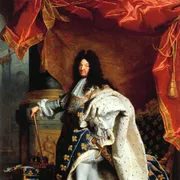
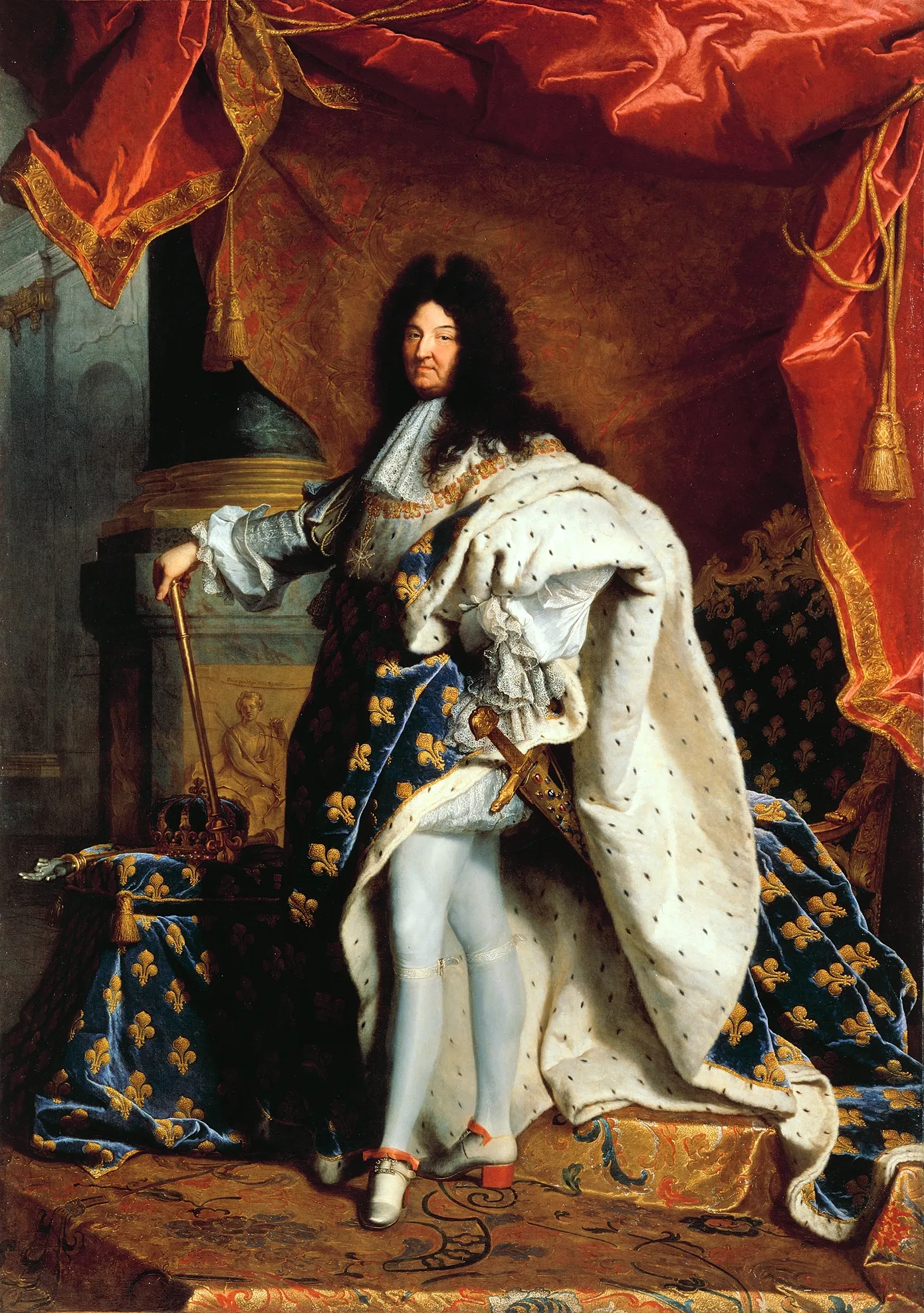
As a youth Louis danced the part of the rising sun in a court ballet, and he made the sun his personal emblem, likening himself to Apollo, the sun god of Greek myth, around whom everything revolved. From 1661 he poured men and money into turning his father’s hunting lodge at Versailles into a vast palace and gardens, the work of the architect Louis Le Vau, the garden designer André Le Nôtre and the painter Charles Le Brun.
In May 1682 the court and government moved to Versailles for good. The king’s daily life became public ceremony: at the morning lever, the right to hand him his shirt or hold a candlestick was a mark of royal favour. The great nobles had to live at court in attendance on the king, far from their estates and their private armies; competing for favour and spending fortunes on clothes and gambling, they came to depend on royal bounty. The Hall of Mirrors, finished in 1684 with more than three hundred mirrors, became the model that every court in Europe tried to copy.
Louis was also a great patron of the arts. The playwrights Molière and Racine and the composer Lully all enjoyed his support, and in 1666 Colbert founded the Academy of Sciences. French became the language of polite society and diplomacy across Europe, a position it held for more than two hundred years.
War and glory
Louis believed that war was the proper path to a king’s glory. In 1667 he invaded the Spanish Netherlands in the name of his queen’s inheritance — the War of Devolution. Maria Theresa had given up her Spanish rights on condition that Spain paid her dowry, and the dowry had never been paid. The Dutch War that followed won him Franche-Comté, and in 1681 he annexed Strasbourg in peacetime, provoking the Nine Years’ War. The military engineer Vauban ringed the new frontiers with star-shaped fortresses, many of which still stand.
In 1700 Charles II of Spain died childless, leaving his throne by will to Louis XIV’s grandson Philip, Duke of Anjou. Louis accepted. Fearing a union of France and Spain, Britain, the Dutch Republic and Austria allied against him, and the War of the Spanish Succession began. The French were beaten at Blenheim and elsewhere, and the bitter winter of 1709 brought famine. The Peace of Utrecht in 1713 kept Philip V on the Spanish throne, but the French treasury was empty.
Faith and persecution
As a young man Louis had many mistresses, among them Louise de La Vallière and Madame de Montespan. After the queen died in 1683 he secretly married the devout Madame de Maintenon, and the court grew more sober.
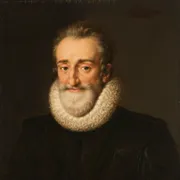
The king believed in “one king, one law, one faith”. In October 1685 he issued the Edict of Fontainebleau, revoking the Edict of Nantes granted by his grandfather Henry IV: Protestant churches were demolished and Protestants forced to convert. For several years already, dragoons had been billeted on Protestant households to harass them into becoming Catholics. Some 200,000 Huguenots risked escape to the Dutch Republic, England, Prussia and elsewhere, taking skilled crafts and capital with them and hardening the Protestant powers against France.
Louis XIV and China
Louis was fascinated by distant China too. In 1684 a Chinese Catholic, Shen Fuzong, came to Versailles with a missionary and is recorded as showing the king how to use chopsticks. In March 1685 Louis sent five Jesuits, among them Jean de Fontaney, Joachim Bouvet and Jean-François Gerbillon, from Brest as “the King’s Mathematicians”, charged with both mission and scientific observation. They reached Beijing in 1688 and were received by the Kangxi Emperor.
Bouvet and Gerbillon stayed at court to teach the emperor geometry and philosophy. When Kangxi fell ill with malaria in 1693, the Jesuits brought him quinine, he recovered, and he granted them land inside the imperial city for a church. That year he sent Bouvet back to France with Chinese books as a gift; in 1697 Bouvet published in Paris a Historical Portrait of the Emperor of China, introducing the French to a ruler as formidable as the Sun King himself. The next year the Amphitrite became the first French merchant ship to sail to China. Late in his reign Louis employed Arcadio Huang, a Chinese from Fujian, to catalogue the Chinese books in the Royal Library — the beginnings of French sinology.
Last years
In his old age Louis lost his heirs one after another: his son the Grand Dauphin died of smallpox in 1711, and the next year his grandson the Duke of Burgundy, the duke’s wife and their elder son all died of measles. In August 1715 gangrene spread in the 76-year-old king’s leg. On his deathbed he called for his five-year-old great-grandson and told him: “I have loved war too much; do not imitate me in that.”
Louis XIV died at Versailles on 1 September 1715 after a reign of seventy-two years, the longest of any monarch in European history. He left a larger kingdom and a more centralised monarchy than any before him — and crushing debts. Parisians showed little grief as his coffin passed; some jeered. Yet the court culture and centralised state he created remained the model for Europe’s rulers for another hundred years.